The weak point of every portable turntable is speed stability, not frequency response or even the cartridge. A light platter and a small, cheap motor can’t hold a rock-steady 33⅓, so the pitch drifts and warbles — wow and flutter. Portables typically measure 0.2% to 0.3%, versus under 0.1% on a decent home belt drive and around 0.025% on my direct-drive reference. That gap is the sound of “portable.”
Here’s why it deserves its own article: wow and flutter is the one flaw you can’t cover with a better cartridge or a nicer speaker, because it’s baked into the platter and motor. It’s also the flaw most buyers can’t name — they hear a record “sound off” and blame the pressing or their ears. Once you can recognize speed error and understand where it comes from, you’ll know exactly what a portable can and can’t do, and you’ll stop blaming your records for the deck’s limitations.
What Is Wow and Flutter, and Why Do Portables Have More?
Wow and flutter are two speeds of the same problem: the platter not turning at a perfectly constant rate. “Wow” is slow variation — a lazy rise and fall in pitch over a second or two, the seasick wobble you hear on a held piano or organ note. “Flutter” is fast variation, a rapid warble that roughens the sound and smears sustained tones. Both are measured together as a single percentage, and lower is better.
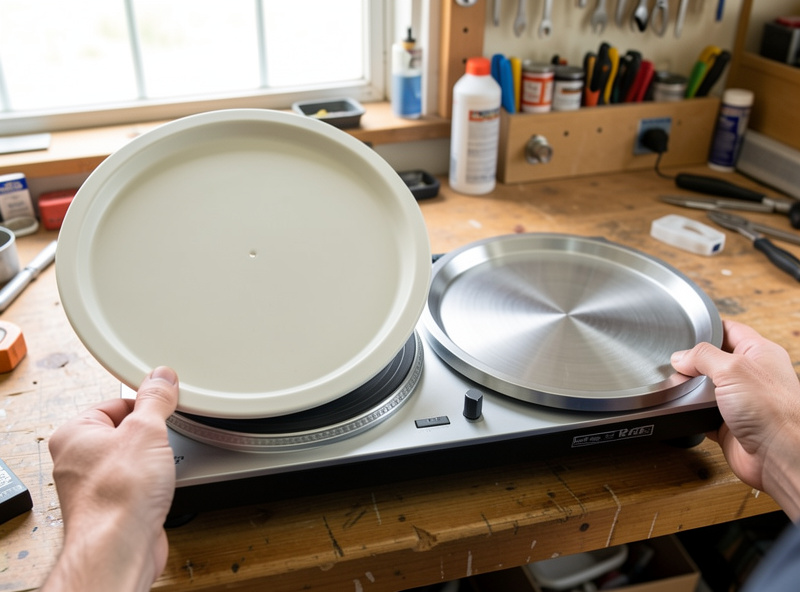
Portables have more of both because the two things that suppress speed error — a heavy platter and a strong, well-regulated motor — are exactly what gets cut to make a deck small and cheap. A heavy platter acts as a flywheel, its rotational inertia smoothing out tiny motor fluctuations before they reach the record. Swap that for a few ounces of thin plastic and there’s no flywheel effect left; every hiccup in the motor shows up as pitch error. I keep a light portable platter and a heavy aluminum one on the bench side by side, and the difference in heft tells the whole story before you ever play a note.
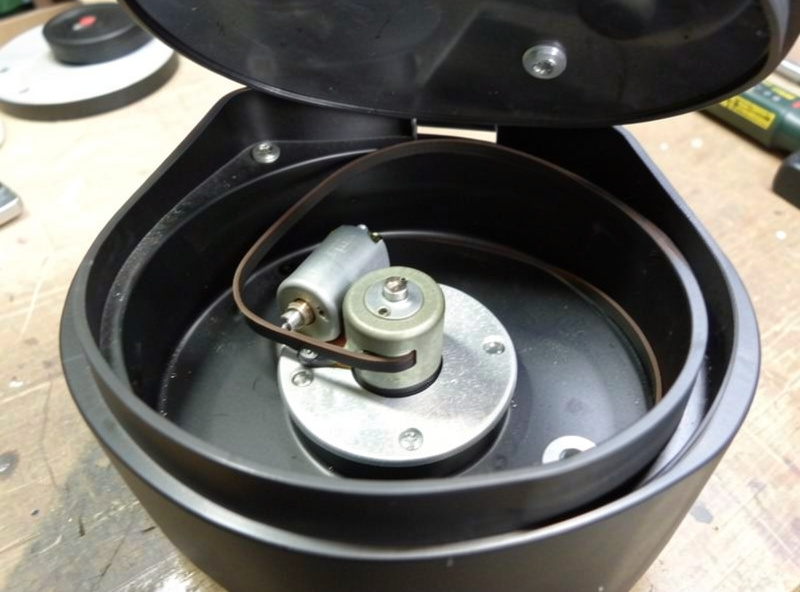
The motor is the other half. My reference deck uses a quartz-locked direct-drive motor that corrects its speed hundreds of times per second; a portable uses a small DC motor spinning a thin belt, often with minimal regulation. Add a lightweight platter to a barely-regulated motor and you get the numbers portables are stuck with. It’s not a defect in any one unit — it’s physics meeting a price target.
How Much Speed Error Can You Actually Hear?
The ear starts noticing pitch instability around 0.1% wow and flutter, and it becomes obvious past about 0.2% on the wrong material. Sustained, pure tones expose it worst — solo piano, held organ chords, sustained strings, a lone flute. Percussive rock and dense mixes hide it, which is why a portable can sound fine on a punk record and seasick on a Chopin nocturne.
Here’s how the deck classes actually compare, with the figures I trust from measurement and manufacturer specs:
| Deck class | Typical wow & flutter | What you hear |
|---|---|---|
| Ceramic suitcase portable | ~0.3% or worse (often unpublished) | Warbling voices, seasick piano |
| Good battery portable (Sound Burger) | <0.25% WTD at 3 kHz | Faint drift on sustained notes |
| Entry home belt drive | <0.1% | Rarely audible |
| Direct-drive reference (SL-1200 class) | ~0.025% WRMS | Inaudible |
The Sound Burger’s under-0.25% figure, published in the AT-SB2022 specifications, is honestly good for its size — you’ll catch a little drift on a long chord, but it stays out of the way on most music. The suitcase decks that don’t publish a figure at all are hiding worse numbers; a blank wow-and-flutter spec is a confession, not an oversight. This is the same reason I rank portables the way I do in my best portable turntable guide — speed stability separates the honest ones from the toys.
Why Does a Light Platter and Small Motor Cause Wow?
It comes down to inertia and regulation. A spinning platter stores rotational energy proportional to its mass and radius, and that stored energy resists sudden speed changes — a heavy platter is a mechanical low-pass filter for motor noise. Cut the mass and you remove the filter, so motor cogging, belt flutter, and bearing friction pass straight through to the record as pitch error.
The motor’s regulation is the active half of the fix that portables skip. A quality deck senses its actual speed and corrects continuously; a cheap portable often just runs the motor at a nominal voltage and hopes. Any load change — the drag of the stylus as it moves from outer to inner grooves, a temperature shift, a battery sagging — shows up as drift because nothing is correcting for it. I once opened a bargain portable expecting some clever speed board and found a two-wire DC motor and a thin rubber belt, nothing more. That’s the whole speed control system on a lot of these decks.
The belt itself adds flutter on portables. A thin, cheap belt stretches and slips, and it transmits its own tiny irregularities to the platter. Heat makes it worse — a belt warmed in the sun goes slack and the speed sags and warbles until it cools. It’s the same belt-wear physics I deal with on vintage decks, where a tired belt is the first thing I replace; I walked through that process in my guide to vintage turntable belt replacement, and the principle applies straight to portables.
Is Belt or Direct Drive Better in a Portable?
At the portable tier, belt drive is fine and direct drive is largely irrelevant — the platter mass and motor regulation matter far more than the drive type. The belt-versus-direct war is over-fought even on full-size decks; on a portable it barely registers, because no portable carries the heavy platter or quartz-locked motor that would make either approach shine.
Belt drive actually suits portables for one good reason: the belt mechanically isolates the platter from the motor’s electrical noise and vibration, which helps rumble on a small chassis. Nearly every decent portable, including the Sound Burger, uses belt drive for exactly this reason. A direct-drive portable would need a properly regulated motor to be worth it, and at portable prices that regulation is what gets cut — so a cheap “direct drive” badge can actually mean worse speed than a decent belt unit. Don’t buy on drive type here; buy on published wow and flutter and platter heft.
If you’re weighing belt against direct drive seriously, that’s a full-size-deck decision, and I compared real belt tables head to head in the Sound Burger versus Crosley test and across my entry-deck writing. For a portable, the honest answer is that the label on the drive matters less than whether the deck can hold pitch at all — and whether it uses a safe cartridge, which is the other thing I check first, as I explained in are battery-powered turntables safe for vinyl.
How I Measure Speed Stability on a Portable
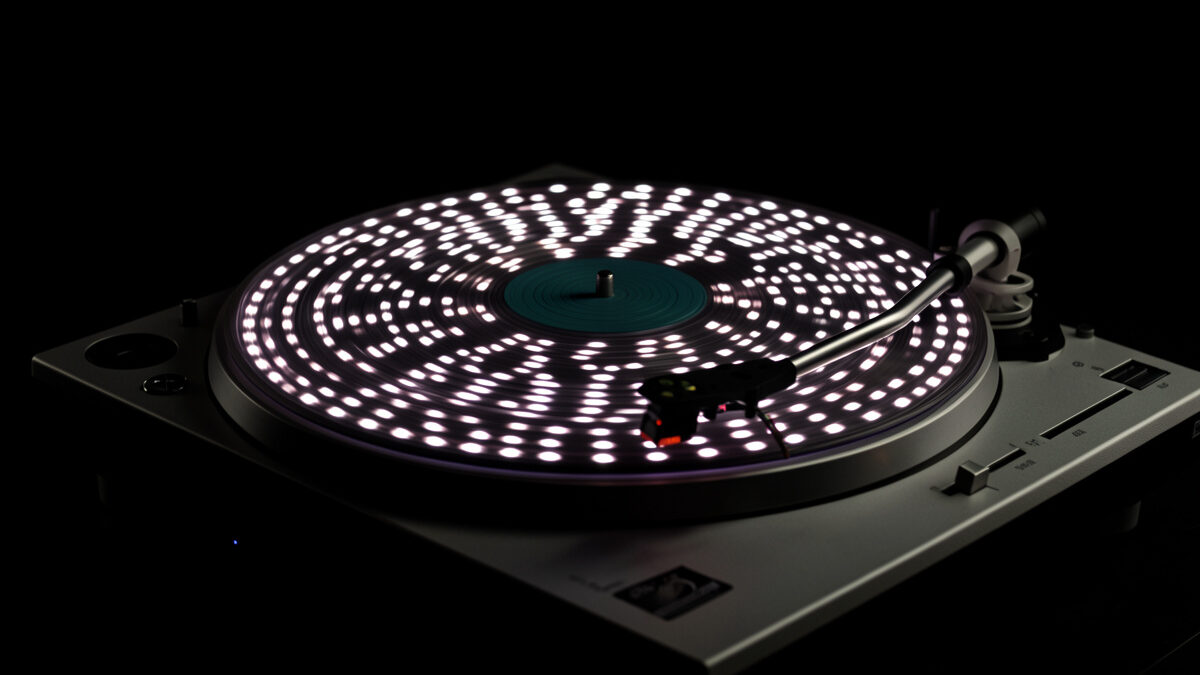
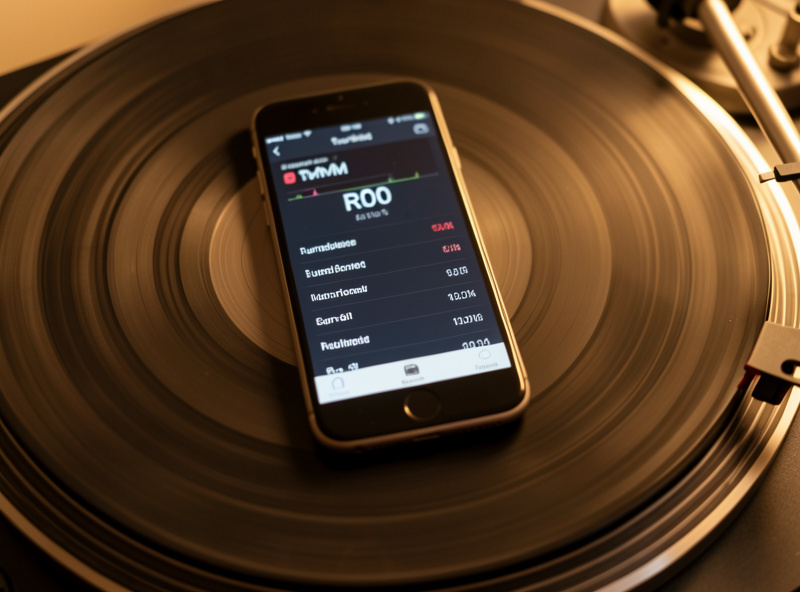
I use three tools in order: a strobe disc for gross speed, a smartphone RPM app for a quick check, and a 3150 Hz test-tone record read on software for real wow-and-flutter numbers. The strobe disc is first because it’s instant — spin it under a mains-frequency light and the printed dots stand still if the speed is dead on, drift forward if fast, backward if slow. On a portable, watching those dots crawl backward as the battery drains is a vivid, physical demonstration of speed sag.
For an actual figure I play a 3150 Hz tone — the reference frequency the wow-and-flutter standard DIN 45507 specifies — and let software analyze the pitch variation, weighted the way the standard defines so the number reflects what the ear perceives. That “weighted” method is why good specs carry the WTD or WRMS suffix; an unweighted number looks better on paper and means less. When a portable’s tone wanders visibly on the analyzer while my reference deck’s sits nearly flat, the difference between 0.25% and 0.025% stops being abstract.
My own honest mistake taught me to measure before I judge. Years back I had a warbly-sounding record and was sure it was a bad pressing — I even bought a second copy. Same warble. It wasn’t the vinyl at all; it was flutter in the deck I was playing it on, and a good deck played both copies clean. Now, when something sounds seasick, I check the deck’s speed before I blame the record. Distinguishing a speed problem from a pressing problem is a core diagnostic skill, and it’s saved me from discarding perfectly good records more than once.
Can You Improve a Portable’s Speed Stability?
A little, but you can’t rewrite the physics. The cheap, effective moves are a fresh belt, a level and solid surface, and keeping the deck cool. A stretched or heat-slackened belt is the single most common cause of a portable running slow and warbly, and a new belt is a few dollars — the same first fix I reach for on any belt deck. Level the deck so the platter bearing isn’t loaded sideways, and keep it out of the sun so the belt stays taut.
What you can’t easily add is platter mass and motor regulation, which is where the real limit lives. Some people try a heavier aftermarket mat to add a touch of inertia, and it can shave a hair off flutter, but a slip mat on a plastic platter is not going to turn a portable into a reference deck. The motor is sealed and unregulated; there’s no dial to fix that. Manage the variables you can — belt, level, temperature, a charged battery — and accept the rest as the cost of portability.
The honest conclusion is the one I keep landing on: a portable is a wonderful second deck for the yard, the trip, or the dorm, and speed stability is simply its ceiling. Independent testing at What Hi-Fi lands in the same place — the best portables are genuinely good for portables, and that qualifier is doing real work. If you want rock-steady pitch for critical listening, that’s a job for a proper table with a heavy platter and a regulated motor, and it always will be. Know the limit, buy the best portable within it, and let the yard be the yard.
Belt-drive portable turntables on Amazon. As an Amazon Associate I earn from qualifying purchases.
Related Reading
- Best Portable Turntable: What Won’t Wreck Your Records
- Sound Burger vs Crosley Portable: Tested Take
- Are Battery-Powered Turntables Safe for Vinyl?
- Vintage Turntable Belt Replacement: A How-To