Why Vertical Storage Is Non-Negotiable
The most important rule of vinyl record storage is simple: always store records vertically, standing upright on their edge like books on a shelf. Never stack records flat on top of each other. Vertical storage distributes weight evenly across the edge of each record, which is the structurally strongest orientation for the thin PVC disc. Stacking records flat — even for a few weeks — applies sustained pressure that causes warping, edge damage, and sleeve fusion.
When records are stacked horizontally, the bottom disc bears the cumulative weight of every record above it. A stack of 50 LPs weighs approximately 30 pounds — enough to compress the bottom record’s grooves and create a permanent dish warp. The warp is gradual and may not be visible at first, but it manifests as pitch wobble during playback as the stylus rides the uneven surface. Our vinyl record care guide covers how warping from improper storage is one of the most common causes of permanent record damage.
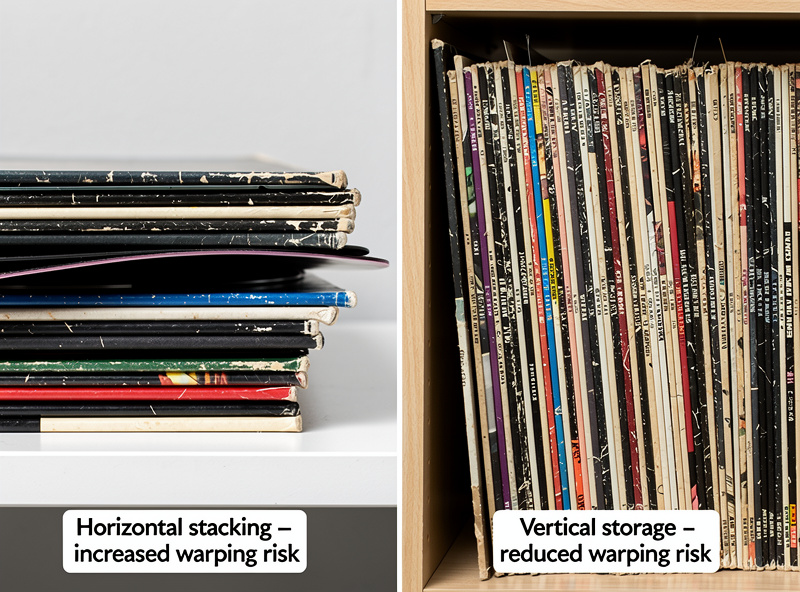
Vertical storage also prevents sleeve fusion — a condition where the heat and pressure of flat stacking causes paper inner sleeves to bond to the record surface. Separating a fused sleeve from the PVC leaves paper fibers embedded in the grooves, increasing surface noise permanently. This is especially common with glossy-coated inner sleeves from the 1970s and 1980s, which contain clay particles that bond to PVC under pressure.
Records stored vertically should lean at no more than 5–10 degrees from true vertical. Over-leaning puts excessive lateral pressure on the spine edge of the outermost record, causing jacket spine splitting. If your shelf is too wide for your collection, use bookends or a spacer block to keep records upright without leaning. Never let records lean unsupported — they will slowly slide and develop edge warps from the constant bending stress.
Shelf Materials: Wood vs Metal vs Plastic
The shelf you choose affects both aesthetics and long-term record preservation. Each material has advantages and trade-offs for vinyl storage.
Hardwood shelves (oak, maple, walnut). Solid wood is the classic choice for vinyl storage. Hardwoods are strong, attractive, and naturally vibration-dampening. A well-built hardwood shelf with 3/4-inch or thicker shelves holds 200+ records per shelf without sagging. Avoid softwoods (pine, fir) for long spans — they bow under sustained weight. Hardwood shelves cost $100–$400 depending on size and quality.
Medium-density fiberboard (MDF) and plywood. Budget shelving from IKEA (Kallax) and similar manufacturers uses MDF or particleboard construction. These materials are affordable ($50–$150) and adequate for most collections. However, MDF is susceptible to moisture damage — it swells and loses structural integrity if exposed to high humidity or water. MDF shelves also off-gas formaldehyde for the first few months after manufacturing, which can migrate into paper jackets. Air out new MDF shelving in a ventilated room for 2–4 weeks before loading records.
Metal shelving (steel, aluminum). Metal shelves are strong, moisture-resistant, and do not off-gas chemicals. Powder-coated steel shelving from brands like Muscle Rack or Edsal holds massive weight without sagging. Metal shelving is ideal for large collections (1,000+ records) where structural load is a concern. The industrial aesthetic may not suit every room, but functionally it is the most durable option. Cost ranges from $50–$200 for heavy-duty units.
Plastic shelving. Avoid plastic shelving for vinyl storage. Plastic flexes under sustained weight, develops permanent bowing, and can off-gas plasticizers that interact with PVC and paper. Plastic is acceptable only for temporary storage or very small collections (under 50 records).
Climate Control: Temperature and Humidity
Vinyl records are made from polyvinyl chloride (PVC), a thermoplastic material that softens with heat and becomes brittle with cold. Controlling the storage environment is the single most effective way to prevent warping, mold, and surface degradation.
Temperature: 65–70°F (18–21°C) is ideal. PVC begins softening at 140°F (60°C) and becomes permanently warped when cooled from this state. Records left in a car dashboard, near a radiator, or in direct sunlight through a window can reach this temperature in under an hour on a warm day. Consistent room temperature in the 65–70°F range is safe indefinitely — records stored at this temperature for 50+ years show no measurable degradation.
Avoid temperature fluctuations. Rapid changes cause differential expansion between the record’s outer edge and center, creating dishing or cupping. A record moved from a 60°F room to an 80°F room undergoes uneven thermal expansion that can introduce a mild warp. Keep records in interior rooms away from exterior walls, heating vents, and windows.
Humidity: 40–50% relative humidity is optimal. Below 30% RH, static charge accumulates rapidly on vinyl surfaces, attracting dust and causing pops during playback. Above 60% RH, mold can grow on paper jackets and inner sleeves, and paper sleeves may stick to record surfaces. A $10 digital hygrometer placed near your collection lets you monitor conditions passively.
In humid climates, a small dehumidifier in the storage room costs $30–$50 and prevents mold growth. In dry climates, a room humidifier or simply placing a water source nearby maintains adequate moisture. The goal is stability — fluctuations between 30% and 70% humidity cause more damage than a steady 55% RH.
Inner Sleeve Types: Paper vs Poly vs MOFI
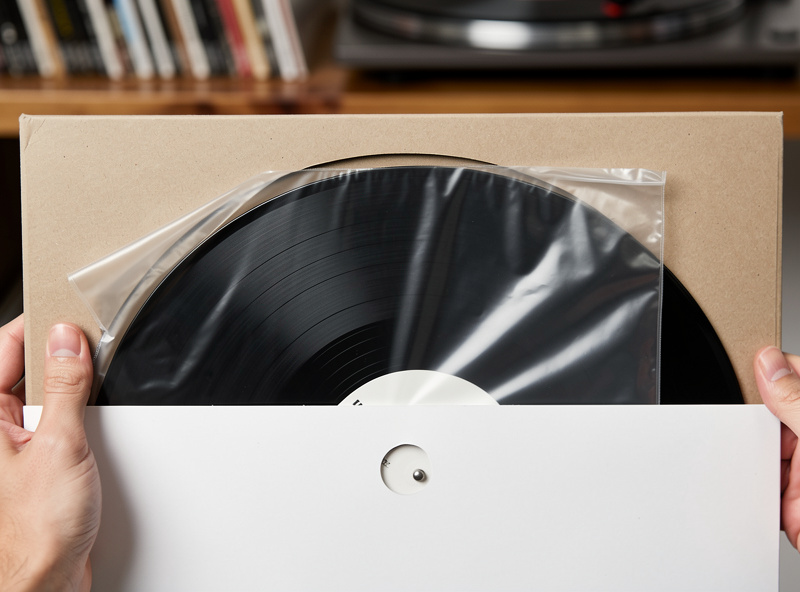
The inner sleeve is the record’s first line of defense against dust, scratches, and static. Standard paper sleeves that ship with most records are abrasive and generate static through friction. Replacing them with anti-static alternatives is the most cost-effective record protection upgrade available.
Paper sleeves ($0.05–$0.10 each). Standard white or printed paper sleeves scratch records every time they slide in and out. Paper fibers shed into the grooves and increase surface noise. Some older paper sleeves contain clay coatings that bond to PVC under pressure and heat. Replace all paper sleeves immediately — there is no scenario where a paper sleeve is preferable to a poly or MOFI-style alternative.
Polyethylene sleeves ($0.15–$0.30 each). Clear, smooth, anti-static poly sleeves reduce friction dramatically compared to paper. They do not shed fibers and cost under $15 for a pack of 50. Poly sleeves are the minimum standard for any collection. They slide easily, resist tearing, and provide adequate protection for everyday use.
MOFI-style rice paper sleeves ($0.40–$0.60 each). These premium sleeves combine a polyethylene outer layer with a rice paper inner lining. The rice paper absorbs static charge while providing a soft, non-abrasive surface. Mobile Fidelity Sound Lab popularized this design, and it remains the gold standard for archival storage. At $25–$30 for 50 sleeves, the cost per record is negligible.
Anti-static lined paper sleeves ($0.25–$0.40 each). A hybrid design using standard paper construction with an inner poly lining. Better than plain paper but not as effective as full poly or MOFI-style. Acceptable for records played infrequently but not recommended for prized pressings.
Outer Sleeve Protection
Outer sleeves protect the album jacket from ring wear, edge splitting, moisture, and general shelf wear. Ring wear occurs when the record’s edge presses against the jacket interior, creating a visible circular indentation on the cover. Over years, ring wear destroys the visual appeal of collectible jackets and reduces their resale value.
Polypropylene outer sleeves ($0.10–$0.20 each) slip over the jacket and prevent ring wear, spine splitting, and corner damage. Use 3 mil thickness for standard single LPs and 4 mil for gatefold double albums or box sets. Store the jacket with the outer sleeve opening facing upward (like a book on a shelf), not facing outward, to prevent the record from sliding out.
Organizing Your Collection
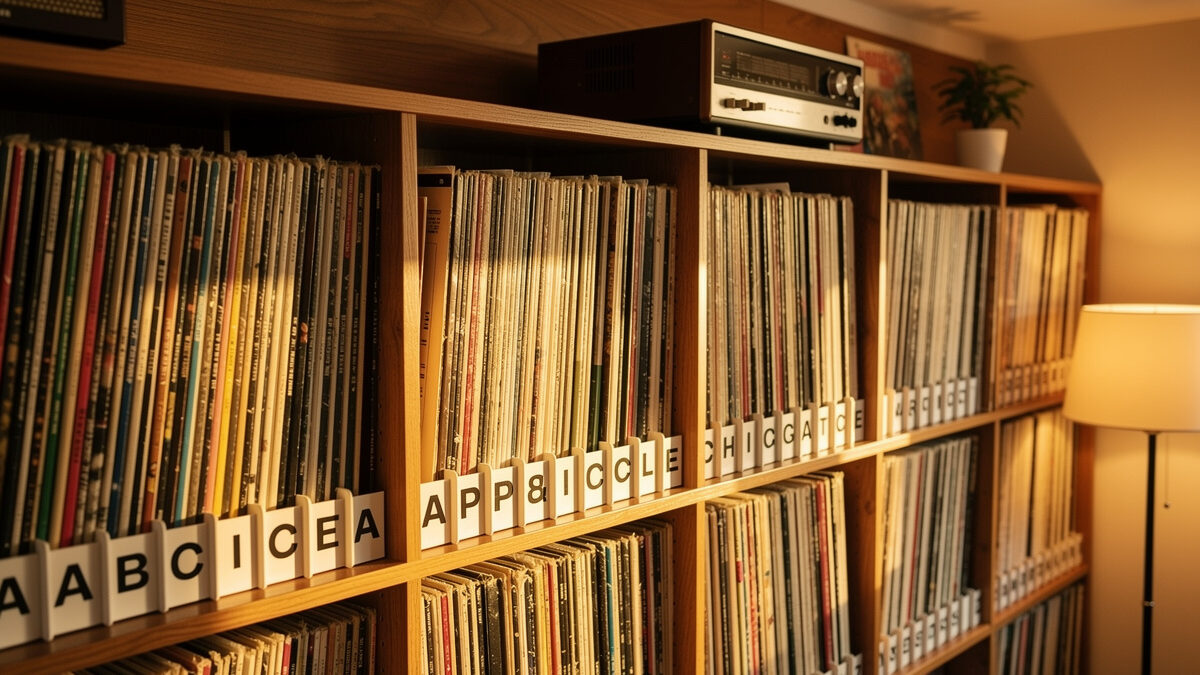
Organization makes your collection usable. A disorganized collection means you cannot find what you want to play, leading to records being pulled out, browsed, and reinserted repeatedly — each handling event adding dust, fingerprints, and wear. The vinyl record organization guide covers the main filing systems — alphabetical, genre, label, decade — and how to choose the one your brain will actually maintain.
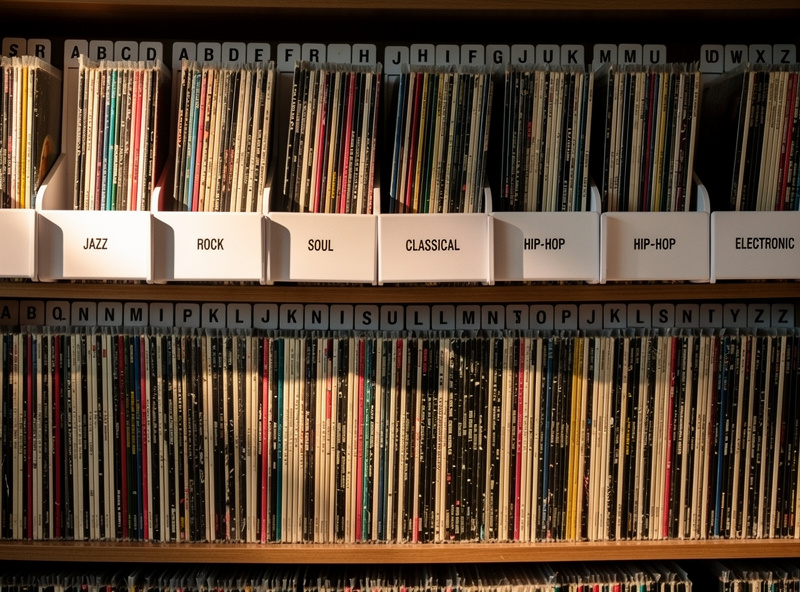
Alphabetical by artist. The most common system. Group all records by artist name, then sort each artist’s releases chronologically. This works well for collections under 500 records where you can browse visually. Use divider tabs (cardboard or plastic) every 10–15 records to speed browsing.
By genre, then alphabetical. For larger collections or diverse tastes, divide by genre first (jazz, rock, classical, electronic), then alphabetize within each genre. This prevents classical records from being buried between rock albums and makes browsing more intuitive when you know what mood you are in.
Catalog numbering. For serious collectors, assign each record a unique catalog number and store by number rather than alphabetically. This eliminates the problem of reorganizing when you add records to the middle of an alphabetical sequence. Maintain a spreadsheet or Discogs catalog that maps numbers to artist/title for lookup.
Digital cataloging. The Discogs app lets you scan barcodes or search by release details to catalog your collection digitally. It tracks pressing information, market value, and condition grades. A complete Discogs catalog serves as insurance documentation — photograph each record and jacket, noting condition and pressing details, and store the photos in cloud backup.
Storage Product Comparison Table
| Product | Type | Capacity | Price | Material | Best For |
|---|---|---|---|---|---|
| IKEA Kallax 4×4 | Cube shelf | ~600 LPs | $100 | MDF | Budget large storage |
| IKEA Kallax 2×4 | Cube shelf | ~300 LPs | $70 | MDF | Medium collections |
| Crosley Record Stand | Browse bin | ~50 LPs | $40 | Wood/MDF | Active listening queue |
| Knowsley LP Storage | Cabinet | ~400 LPs | $300 | Hardwood | Living room display |
| Muscle Rack UR301860PB | Steel shelving | ~1,500 LPs | $80 | Steel | Large collections |
| Mobile Fidelity Inner Sleeves | Rice paper + poly | 50 pack | $28 | Poly/rice paper | Archival protection |
| BCW Poly Outer Sleeves | Polypropylene | 100 pack | $15 | Polypropylene | Jacket protection |
| Hygrometer (ThermoPro) | Monitoring | N/A | $10 | Electronic | Climate monitoring |
Protecting Valuable Records
Records worth $50 or more — first pressings, limited editions, autographed copies — deserve enhanced protection beyond standard storage practices.
Archival outer sleeves. Use acid-free, archival-grade polypropylene sleeves for valuable records. Standard polypropylene sleeves are fine for everyday use, but archival sleeves prevent long-term chemical interaction between the sleeve material and the jacket surface.
Individual storage for high-value items. Store records worth $100+ separately from the main collection in dedicated archival boxes or individual protective cases. This reduces handling frequency and prevents accidental damage during browsing. Limit plays of irreplaceable pressings — if a recording is available on streaming, listen digitally.
Original inserts. Keep all original inserts — lyric sheets, inner sleeves, download cards, posters, stickers — inside the jacket. Missing inserts reduce the value of collectible pressings. If the original inner sleeve is damaged, store the record in a MOFI-style replacement and keep the damaged original separately inside the jacket.
Insurance documentation. Photograph each valuable record and jacket, noting matrix numbers, pressing details, and condition grades. Store photos in cloud backup along with your Discogs catalog. If disaster strikes, a complete photographic record with market valuations makes insurance claims straightforward.
Common Storage Mistakes
Storing records flat. Even temporarily stacking records flat causes warping over weeks. Always return records to vertical storage immediately after handling.
Overpacking shelves. Records packed too tightly cannot be removed without gripping the label area, which risks fingerprints and scratches. Leave enough space to slide records in and out comfortably — approximately 80% shelf capacity is optimal.
Near heat sources. Radiators, heating vents, sunny windows, and electronics that generate heat all pose warping risk. Even moderate heat over weeks degrades PVC. Place shelving on interior walls away from any heat source.
In basements without climate control. Basements are prone to humidity fluctuations, flooding, and pest infestation. If you must store records in a basement, use a dehumidifier, waterproof shelving off the floor, and sealed outer sleeves. Check for moisture and pests monthly.
Using records as decoration in direct sunlight. UV light degrades PVC chemically, causing surface clouding and brittleness. Records displayed on walls should be in locations with zero direct or indirect sun exposure. UV-filtering window film reduces but does not eliminate the risk.
These tips are the condensed version. For the full breakdown of shelving specs, sleeve systems, climate control, and moving records safely, my vinyl record storage guide covers every layer of it.
Frequently Asked Questions
Can I store records on their side at an angle?
Records should lean no more than 5–10 degrees from true vertical. Excessive leaning puts lateral pressure on the spine edge of the outermost records, causing jacket splitting and edge warps. Use bookends or spacer blocks to keep records near-vertical without leaning on each other.
How many records fit on a standard shelf?
A standard 13-inch cube shelf (like IKEA Kallax) holds approximately 50–70 LPs per cube depending on jacket thickness. A 2×4 Kallax holds roughly 300 LPs total. A 4×4 Kallax holds roughly 600 LPs. Gatefold and double albums reduce capacity by approximately 30%.
Should I keep records in outer sleeves?
Yes, outer sleeves prevent ring wear, spine splitting, and corner damage to album jackets. Polypropylene sleeves cost $0.10–$0.20 each and last for decades. The protection they provide to collectible jackets — which can be worth more than the record itself — makes them a mandatory investment.
What temperature is too hot for vinyl records?
Temperatures above 120°F (49°C) begin to soften PVC, and 140°F (60°C) causes permanent warping. A car dashboard in summer, a sunny windowsill, or a room above a radiator can all reach these temperatures. Store records at 65–70°F (18–21°C) in interior rooms.
Is it OK to store records in a garage?
No, garages experience extreme temperature swings, humidity fluctuations, dust, and pest exposure. Even insulated garages are unsuitable for long-term vinyl storage. Interior rooms with climate control are the only safe option for valuable collections.
How do I store 7-inch singles?
Seven-inch singles store vertically just like 12-inch LPs, but they need smaller shelving or divider inserts within standard shelves. Dedicated 7-inch storage boxes ($10–$20) hold 50–100 singles vertically. Use poly inner sleeves sized for 7-inch records to prevent sliding within larger jackets.
Related Articles
- Vinyl Record Care Guide: Protect Your Collection for Decades
- Best Record Cleaners 2026: Manual, Ultrasonic, and Vacuum Compared
- How to Clean Vinyl Records: Step-by-Step Guide
- Turntable Buying Guide 2026: How to Choose Your First Record Player
- Belt Drive vs Direct Drive Turntables: Which Is Better for Vinyl?